Friday, July 8, 2011

Languedoc: Cassolet in Carcassonne, Pastis en Provence, and Calissons d’Aix

Languedoc is the region of Southern France which is West of Provence. A specialty near Carcassonne is cassolet, and we dined in the old city at the top of a hill on an outdoor patio with the closest view being of the fortress, and behind that the Cathedral dating from the 400’s. I’m not sure if it was the best cassolet in town, but given the setting, it tasted pretty delicious.
Cassoulet with duck from Carcassonne.
From there, we were just a short train ride into Provence, where we spent time in Arles, Nimes, Avignon, and Aix-en-Provence. Our guidebook discussed a “gastronomic dining experience” at the restaurant of famous chef Jean-Luc Rabanel. Fortunately for our wallets, his expensive ($150/person) put-your-meal-in-the-hands-of-the-chef restaurant was closed both nights we stayed in Arles. However, his also recommended bistro A Cote next door was open where the 4-course dinner was 37E.

I ordered a seafood main which included a filet of white fish cooked in a single-serve paella-style pan with lots of mild, roasted garlic, carrots, mussels, and a prawn.


Will ordered the fois gros starter, lamb with potatoes and vegetables, the cheese plate which had three lovely selections – one local, and both others from France – a camembert and a goat cheese.


Everything was very delicious. I didn’t find it especially “experimental” like the guidebook had described it, except for possibly the dessert, which was awesome.  It was a layer of chestnut mousse topped with a “fromage blanc” (which our waitress described as “yogurt.” I would have called it “crème fraiche.”) That layer was then topped with a baked layer of carmelized tart sweet apricots. The combination of flavors and the thick creamy but slightly grainy texture of the chestnut mousse was outstanding.

In any case, it was fun to know we were experiencing the work of a renowned chef.

The untouched dessert, as presented in its ramekin. With such lovely layering of the custards,
I was surprised it wasn't served in a clear serving dish to highlight the contrasts.

After we scooped below the top layer of apricots - see the cream topping with the chestnut mousse on the spoon!
In Aix-en-Provence, we made a potentially risky choice of a near-empty restaurant with a nice-looking menu but prices that seemed “too good to be true.” We know when things seem that way, they often are, and we were nervous that our budget-consciousness would leave us disappointed with our meal. But we were in for such a treat! The menu was specifically called out as “specialities d’Aix” – items and preparations unique not just to Provence, but to Aix in particular. We each had a 3-course meal, so between the two of us, we sampled 6 different dishes, starting with salads. 

The two salads were basically the same base of fresh mixed greens, tomatoes, and a balsamic vinaigrette. One was topped with lots of tiny cubes of three different cheeses and the other topped with squid. I was boldy and bravely venturing for nearly the first time into squid territory (because of my positive experiences on this trip with octopus). Concerns about chewiness be gone! This squid were the silkiest, most tender salad toppings I could imagine. They were stewed in a flavorful broth, then served warm on a crisp bed of fresh salad greens and dressed with tomatoes and vinaigrette.


Salad with cheeses.

Salad with squid.


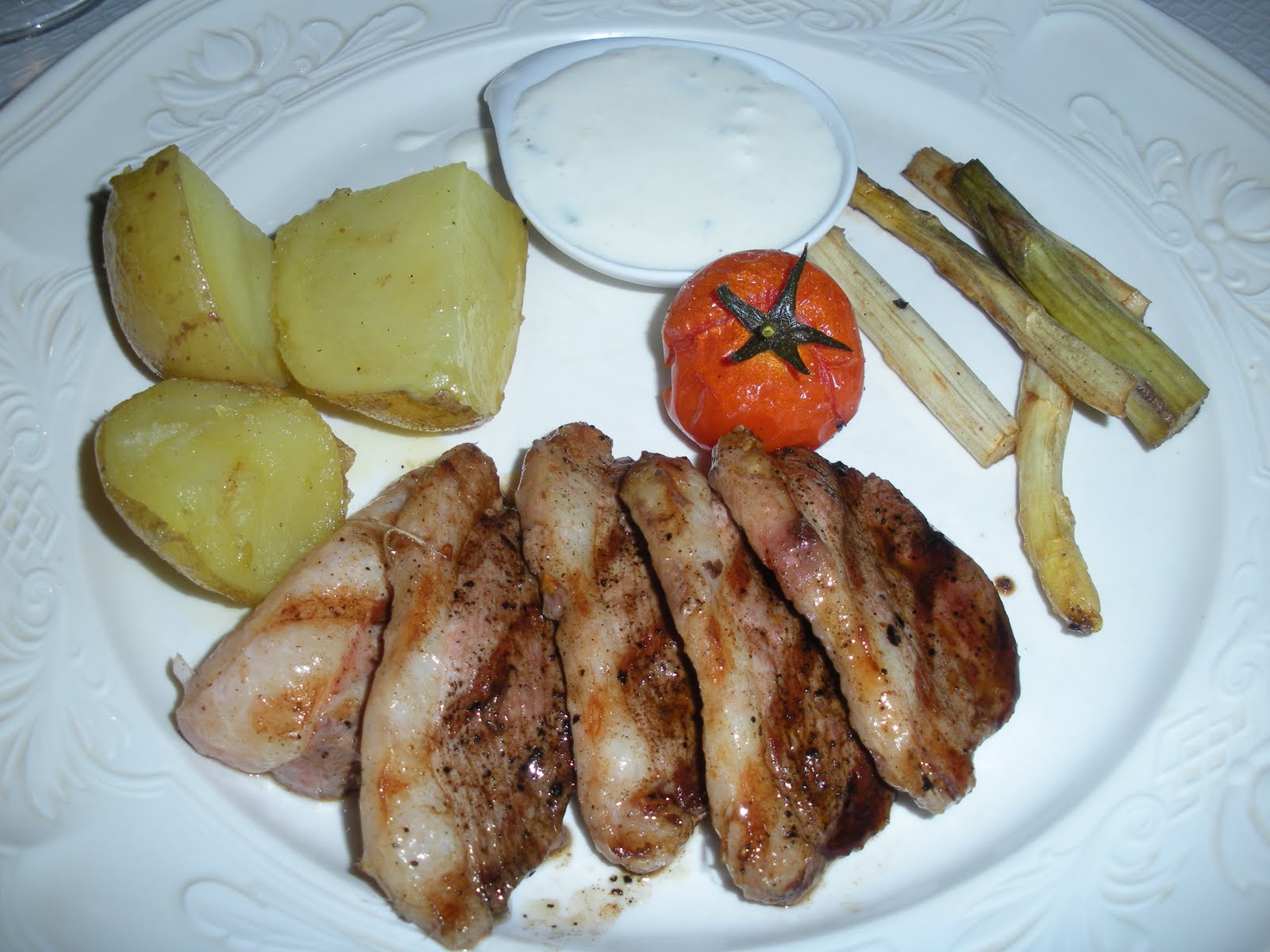
After that, we had a tenderized flank steak with an onion-cherry confit, and a duck breast with a yogurt-cheese sauce.
Duck.

Steak.
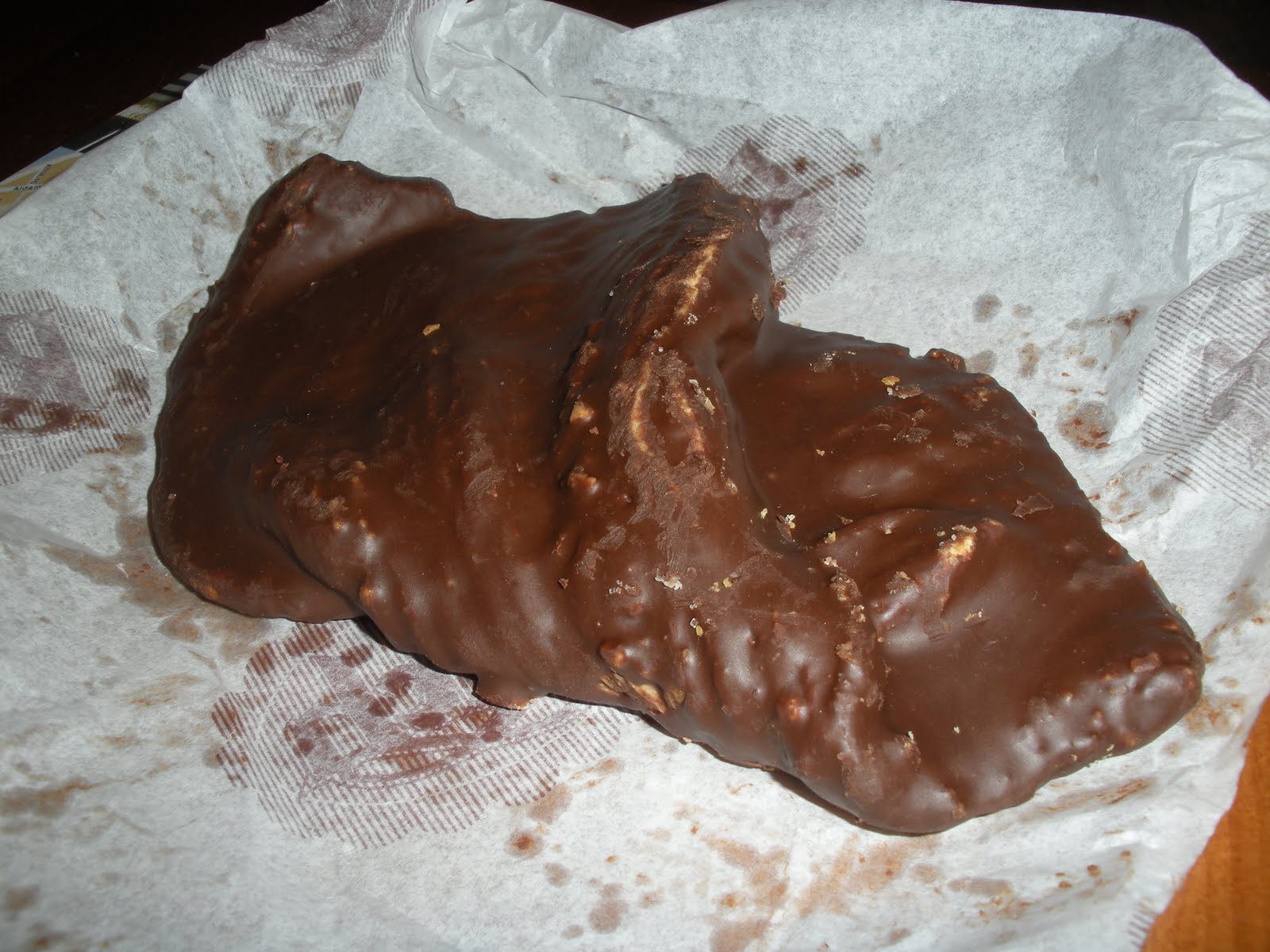
For dessert, we had a delicious stacked 3-chocolate mousse cake: three layers of chocolate - milk and hazelnut praline, white, and dark mousse on a thin butter pastry with crème anglaise. But the coup-de-grace was a Calisson Cream dessert of the house. Calisson is the name of a specialty confection from Aix. It is a thin, almost papery wafer, topped by a ground-almond paste similar to marizpan, and frosted with a thin layer of a sweet but otherwise rather tasteless frosting which hardens into a crust (sometimes, that is then covered in chocolate, which definitely improves the whole thing!) They are formed into an almond shape about 2 inches across. The overall effect is of a subtle flavored, slightly sticky but mostly smooth and not too sweet candy. If you don't like marzipan, you might not like these, and the wafer on the bottom that gives it all structure can be a bit off putting, primarily by its rice-paper texture. But they are unique, and enjoyable,and used in many different forms, like liqueur, gelato, and cookies. In this case, the chef used the ground almonds and almond flavoring in a whipped cream, which filled a yummy waffle-cone cup lined with chocolate - not at all rice-papery, but still waffle imprinted like the candy base.
Triple chocolate mousse cake.

Calisson confections interpreted as a dessert.

Actual calissons in their expected form from the confectionary.


Thursday, June 30, 2011

Pastry Interlude

Here are some photos of some of the many pastries we've eaten, or just gazed upon in lucious window displays, that I'm not necessarily able to describe or that don't specifically fit into a particular cuisine or specialty, but that I still want to share.

Peach tart.
Canele. These were all over Paris, and I always wanted to try them but didn't. They come in a large size, and then this 3-bite size. I thought it was going to be a glazed pound cake. It's not - it's very soft and eggy inside, almost like a custard. I usually like custard, but I didn't care for this. The glaze did not have a flavor of it's own, and in fact wasn't even particularly sweet. But it is interesting, and worth trying since they seem to be so ubiquitous in French bakeries.

This was my favorite of all the pastries we had. It was an amazing shortbread crust, filled with a
thick rich dark chocolate ganache, topped with a light milk chocolate mousse, and garnished with
fresh juicy raspberries and a raspberry glaze. See detail below.

Detail of chocolate raspberry tart from above.

Window display at the same patisserie where we got the chocolate raspberry tart.

Other half of the same window display as above.

I'm not sure what all was inside this, but those are meringues layered vertically around the perimeter,
with chocolate cookie disks fanned out around hte top and filled with fresh pears. It has to be delicious.
I don't know quite how they made these, and quite how they would taste, but it looks like it's pastry
stuffed with bread. Seems like a good idea? I love the technique and how it looks.

This is actaully an ice cream centerpiece. It was in a freezer case at the patisserie and I thought it was so incredibly creative albeit rather impractical. You wouldn't get to enjoy it very for very long as a decoration unless your dining room table has a glass freezer case on top. But what a fun way to make an ice cream and fruit dish.

Okay, so not technically pastry, this gelato still qualifies as part of the over-the-top delicious desserts
we engaged in. This was one of our favorite combinations - chestnut and chocolate. This was also one of
the larger scoops we were ever served (though the scoops got larger and the prices got lower the further
we went into Italy.... this chesnut was obviously still in France.

Apple tart with almond topping.

Sicilian cannoli from the Farmer's Market, the guy who made it stuffed the shells in front of us.

Sicilian pannetone. 

Tart with a custard filling and pears and peaches, topped with almonds.
Walnut and caramel tart.
Will chose this while I watched the luggage, so I didn't even see what it was called. We
thought it was going to have a custard filling, but it was actually cream and it was incredible.
It was like a genoise cake stuffed with rum cream, and the top layer was light and a bit
crunchy and then the center was cool and sweet.
An assortment of cookies from an Veronese bakery. I wanted to just get three, but they sell by weight
and she kept telling me, "just choose one more" and then put it on the scale and said "just two more!" Okay.
The striped one on the left was a puff pastry with an apricot jam. The donut shaped one was just puff pastry
(but nothing is ever wrong with that!) as was the one on the far left with sprinkles, but it was frosted with a set
meringue. At the top left is a pine nut cookie which I after the exterior crunch and nuttiness, was a rich
butter cookie inside. The powdered sugar one on the left is amaretto - but it wasn't a crunchy amaretti,
it was a rich, chewy marzipan with amaretto. The two filled ones at the top right were my favorite, and they
weren't ones I would have picked on my own, they were the two the bakery lady recommended as her
favorites. The chocolate one is - chocolate! - and the white heart shaped one was almond. The cookies look
like they would be crispy meringues but they were much better in my opinion, a bit crispy and a
bit chewy. Finally, the little filled one was chocolate-hazelnut.
This was a specialty from Trieste, where the pretzel shape is seen all over in many types of foods. This was a flakey pastry stuffed with a fruitcake filling of candied fruit like orange peel, rum, pine nuts, hazelnuts, etc. It was all the flavors the people who don't like fruitcake don't like, and it was actually even a bit strong for me - someone who does like fruitcake. I wasn't crazy about it, which was too bad, because it was very expensive.
Triesten fruitcake cross-section.

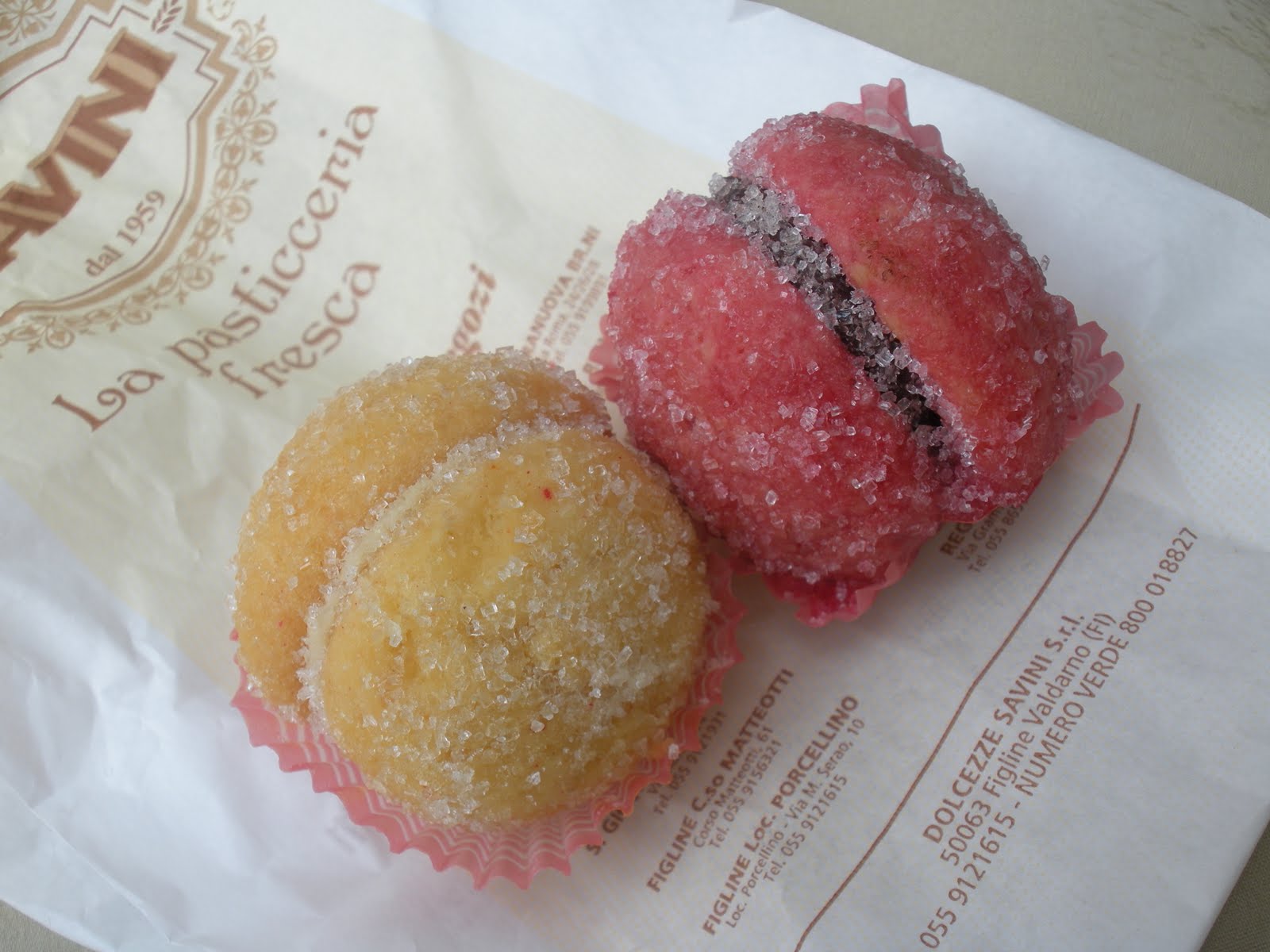
Cute cupcakes from Firenze... I wasn't sure if they would be more cookie or more cake, but they were like cupcakes coated in yummy granular sugar and filled with frosting: one was lemon, and the other was raspberry and chocolate.
Apple Chocolate-Chip sweet bread from our last morning in Rome.


Thursday, June 23, 2011

Basque Country

Basque Country is a region spanning the France/Spain border that has a culture, language, and food tradition all its own. It is considered by many to be the “culinary capital” of Spain, and we were told along the way that tapas originated in San Sebastian, a city we visited and ate in, and that the tapas there are unlike any you will find elsewhere in Spain. Much of the wealth of this area was due to the maritime prowess of its people, so the cuisine is heavily oriented toward seafood. But they are also known for some specific pastry – gateaux basques – as well as chocolates. We had some of all, naturally!

The upside of tapas – called pintxos (prounounced peen-choss) – besides how delicious they are!! – is that you can try so many different types without getting too stuffed. The downside for a blog is that there is so much to describe! So, I will use the caption of each photo for extra detail. 
 

Chorizo sausage, tortilla (potato omlette), marinated artichoke heart with olives,
puff pastry with crab topping, crostini with blue cheese and walnuts
.

Crostini with onion jam and a round of grilled soft cheese.


Besides seafood, the cuisine uses a lot of peppers – both red and green – but we didn’t have anything that we considered spicy, and the food is not known to be spicy, as well-seasoned as it is. Onions, garlic, and tomatoes also figure heavily into the dishes, along with all types of seafood: mussels, white fishes of all types including a lot of cod (bacalao, sometimes salt cod), mussels, shrimp, clams, octopus, squid, crab, and on and on to things I can’t even hope to identify. 

Live, squiggly snails in a mesh sack at the market.

It's hard to tell from this photo how absoltuely enormous the bell peppers
were -many were well over 10" long.


The chocolates – filled, and truffles, were all very good. The pastries were of a more dense texture, sort of a cross between a pate brisee and a cookie. The Gateau Basque is the consistence of a cookie, but more the texture of a shortbread pie crust. Sometimes it has a soft “cream” filling, otherwise it is filled with cherry jam. We preferred the jam versions because the “cream” filling while softer than the baked exterior, is still mostly the same taste and texture both inside and outside. This was the same for the house specialty “Pastel Vasco” we tried from a local bakery… it was shaped like a tart, but had a soft pie-crust texture with a dense, buttery filling. All of the ones we tried were very good, but they aren’t what I will go back for. They are sweetened, but aren’t too sweet, yet otherwise don’t have much flavor profile. I think the finesse is in the texture, which is too soft to be a cookie, but too firm and crispy to be cake. It’s difficult to describe, so if you have a chance to try one, I highly recommend you do!

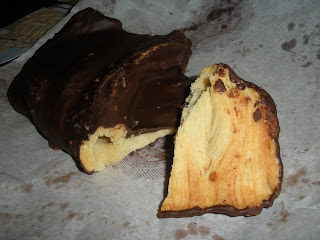
This was a pastry kind of like a palmier - a crunchy croissant, not too sweet,
but completely covered in chocolate.

Detail of pastry above.

Chocolate mousse cake.
Basque cream-filled tart... the center is pretty much the same flavor as the exteriorb
but a slightly softer texture.I wasn't crazy about it, but it was interesting to try.

This was literally a chocolate truffel on a cookie. What a fantastic idea!!


This was an amazingly delicious "fruit cake" - this is what all fruit cake should be like...
the cake was moist and sweet, the fruit was carmelized and probably soaked in
some kind of liqueur, and the top was decorated wtih slices of actual apples.

Not sure that these jellies are a particular Basque specialty, but they were incredibly delicious -
with actual fruit flavor and so very cute.


Pintxos are the way to go in Spainish Basque, but in France, the specialty is Ttoro – a seafood stew. It has some similarities with bouillibase, but a richer, stewier broth. The one we had was loaded with shrimp, prawns, white fish, and mussels, along with red peppers and tomatoes.


This seafood stew with shrimp, prawns, and crawfish-like guys, along with lots of white fish
filet, mussels, potatoes, and red peppers is a specialty in Saint Jean-de-Luz.

Grilled sardines with salade. If you approach cafefully, the bones pull out pretty easily in
one complete skeleton, and these little guys are really tasty, especially with all the herbs.


Had to include this shot of the "leftovers" from our Basque seafood stew...
These French macarons weren't nearly as pretty as the ones you'll find all over Paris, and they
weren't filled with a soft center, but they had the most delectable nutty flavor, and crisp exterior
with chewy middles. They are supposedly baked according to the same recipe used to make
them for Louis XIV when he was here for his wedding to Marie Therese in 1660.


There were some other local specialties that we did not get to try, such as piperade (peppers, tomatoes, garlic, ham, and eggs), axoa (veal or lamb stew on mashed potatoes), the herbal liquor izarra, and txakoli sparkling wine. We did have some local white wine, cidre, and sangria though to wash down all the other treats. We didn’t so much as run out of time, but run out of stretch in our pants!

Go to Basque Country – either the French side or the Spanish side, but better yet, BOTH – and go hungry, then try as many different items as you can. Things that you don’t think look good or that you don’t think you like will taste amazingly delicious because they are so fresh, and so unique, and prepared following generations of tradition.